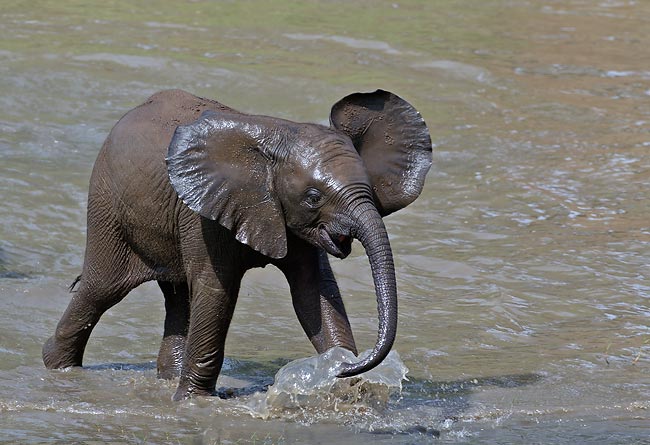
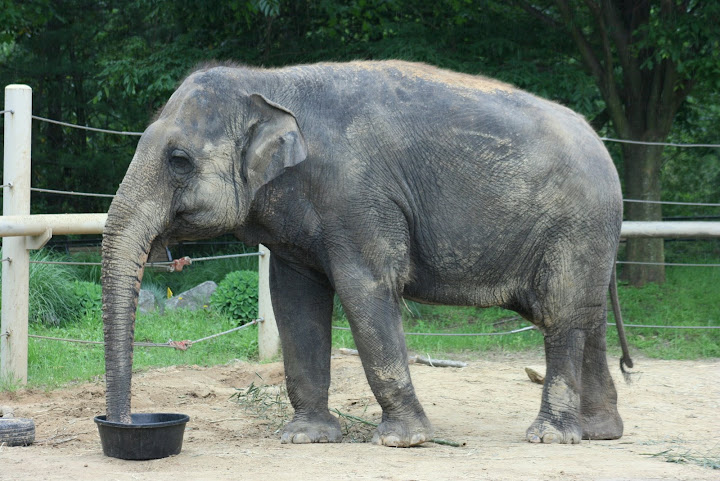
African Elephants Pictures and Information - Animals Zoo Park : African elephants (Loxodonta africana) are the largest land animals on Earth, weighing up to 5,400 kg.
They are slightly larger than Asian elephants and can be identified by their larger ears. As the name tells, African elephants live in Africa, in any habitat with adequate quantities of food and water: tropical forests, savannah areas, deserts and river valleys.
The African elephants are an endangered species. Although they have few natural enemies, these elephants are hunted for their tusks, made of ivory. However, the situation of African elephants is complex because there is overpopulation in some areas and under population in others.
 African Elephants Picture
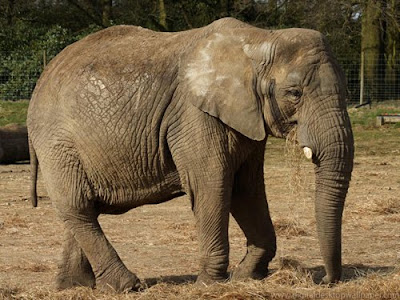 African Elephants Picture
 African Elephant Close up Wallpaper
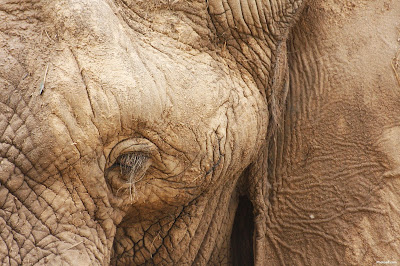 African Elephants Wallpaper
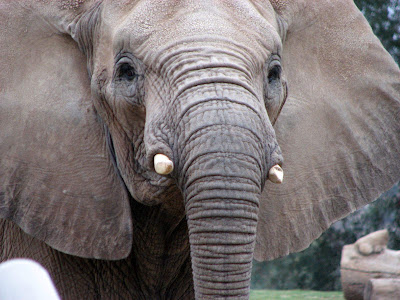 African Elephant Wallpaper
> African elephants are the species of elephants in the genus Loxodonta, one of the two existing genera in Elephantidae. Although it is commonly believed that the genus was named by Georges Cuvier in 1825, Cuvier spelled it Loxodonte. An anonymous author romanized the spelling to Loxodonta and the ICZN recognizes this as the proper authority.
Fossil Loxodonta have only been found in Africa, where they developed in the middle Pliocene.
> African elephants Size : African elephants are bigger than Asian Elephants. Males stand 3.64 meters (12 ft) tall at the shoulder and weigh 5,455 kg (12,000 lbs), while females stand 3 meters (10 ft) and weigh 3,636 kg to 4,545 kg (8,000 to 11,000 lbs). However, males can get as big as 15,000 lbs (6,800 kg).
> African elephants Teeths :Elephants have four molars; each weighs about 11 lb (5.0 kg) and measures about 12 inches long. As the front pair wear down and drop out in pieces, the back pair shift forward and two new molars emerge in the back of the mouth. Elephants replace their teeth six times. At about 40 to 60 years of age the elephant no longer has teeth and will likely die of starvation, a common cause of death.
Their tusks are teeth; the second set of incisors become the tusks. They are used for digging for roots and stripping the bark off trees for food, for fighting each other during mating season, and for defending themselves against predators. The tusks weigh from 50-100 pounds and can be from 5 to 8 feet (2.4 m) long. Unlike Asian elephants, both male and female African elephants have tusks. The enamel plates of the molars are lesser in number than in Asian elephants.
> Species :
* Loxodonta adaurora, extinct, presumed antecedent of the modern African elephants.
* African Bush Elephant (Loxodonta africana).
* African Forest Elephant (Loxodonta cyclotis).
Bush and Forest Elephants were formerly considered subspecies of the same species Loxodonta africana. However, they are nowadays generally considered to be two distinct species [1]. The African Forest Elephant has a longer and narrower mandible, rounder ears, a different number of toenails, straighter and downward tusks, and considerably smaller size. With regard to the number of toenails: the African Bush Elephant normally has 4 toenails on the front foot and 3 on the hind feet, the African Forest Elephant normally has 5 toenails on the front foot and 4 on the hind foot (like the Asian elephant), but hybrids between the two species commonly occur.
> Poaching significantly reduced the population of Loxodonta in certain regions during the 20th century. An example of this poaching pressure is in the eastern region of Chad—elephant herds there were substantial as recently as 1970, with an estimated population of 400,000; however, by 2006 the number had dwindled to about 10,000. The African elephant nominally has governmental protection, but poaching is still a serious issue.[5]
> Conservation : Human encroachment into or adjacent to natural areas where bush elephants occur has led to recent research into methods of safely driving groups of elephants away from humans, including the discovery that playback of the recorded sounds of angry honey bees are remarkably effective at prompting elephants to flee an area. Some elephant communities have grown so large, in Africa, that some communities have resorted to culling large amounts to help sustain the ecosystem. From : Information about African elephants Information Courtesy By
WikipediaAfrican elephants - Scientific classificationKingdom: Animalia
Phylum: Chordata
Subphylum: Vertebrata
Superclass: Tetrapoda
Class: Mammalia
Subclass: Theria
Infraclass: Eutheria
Order: Proboscidea
Family: Elephantidae
Genus: Loxodonta
> See more and enjoy
Baby African Elephants Photo and Pictures Gallery - Animals Zoo Park
 Baby African Elephants Photo and Picture
 Baby African Elephants Picture
 Baby African Elephants Photo
 Baby Elephants Photo and Pictures
 African Elephants Picture
 Baby African Elephant Photo
 Baby Elephant - Animals Zoo Park